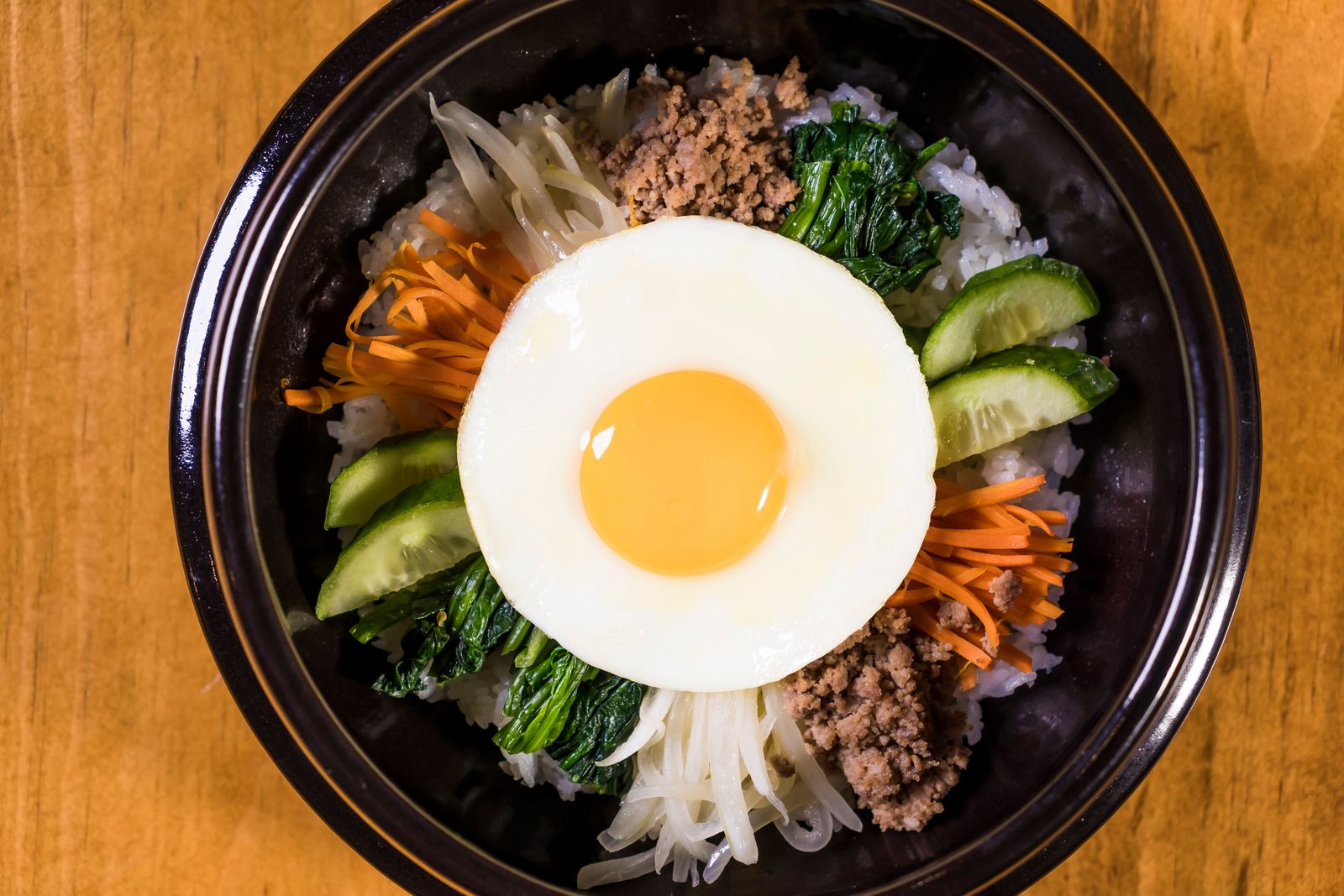
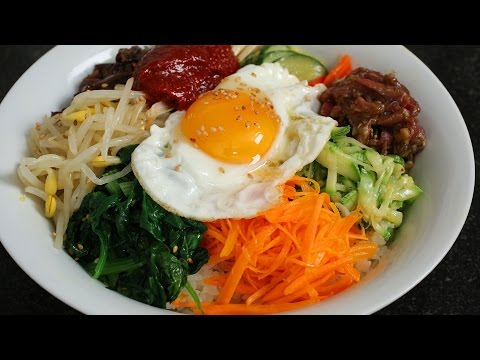
Korea's most iconic rice dish — a bowl of warm rice topped with seasoned vegetables, beef, a fried egg and gochujang, mixed vigorously before eating.
Bibimbap — mixed rice — has been eaten in Korea since at least the Joseon dynasty (1392-1897), where it appears in royal court records. The name appears in the 1810 encyclopedia Mongyupyeon. The dish is thought to have originated as a way of using up leftover side dishes (banchan) by mixing them together with rice at the end of a meal. The dolsot (stone pot) version was developed later, the stone pot retaining heat long after cooking and creating the nurungji — the crispy rice crust at the bottom that many consider the best part of the dish. Jeonju, a city in North Jeolla Province, is considered the home of bibimbap and has developed its own distinct version using raw beef (yukhoe) and rice cooked in ox bone broth.
Each vegetable topping (namul) must be seasoned separately. Use a dolsot (stone pot) for the crispy rice crust at the bottom — this is called nurungji and is the best part.

© 2025 What To Eat · hello@whattoeat.world