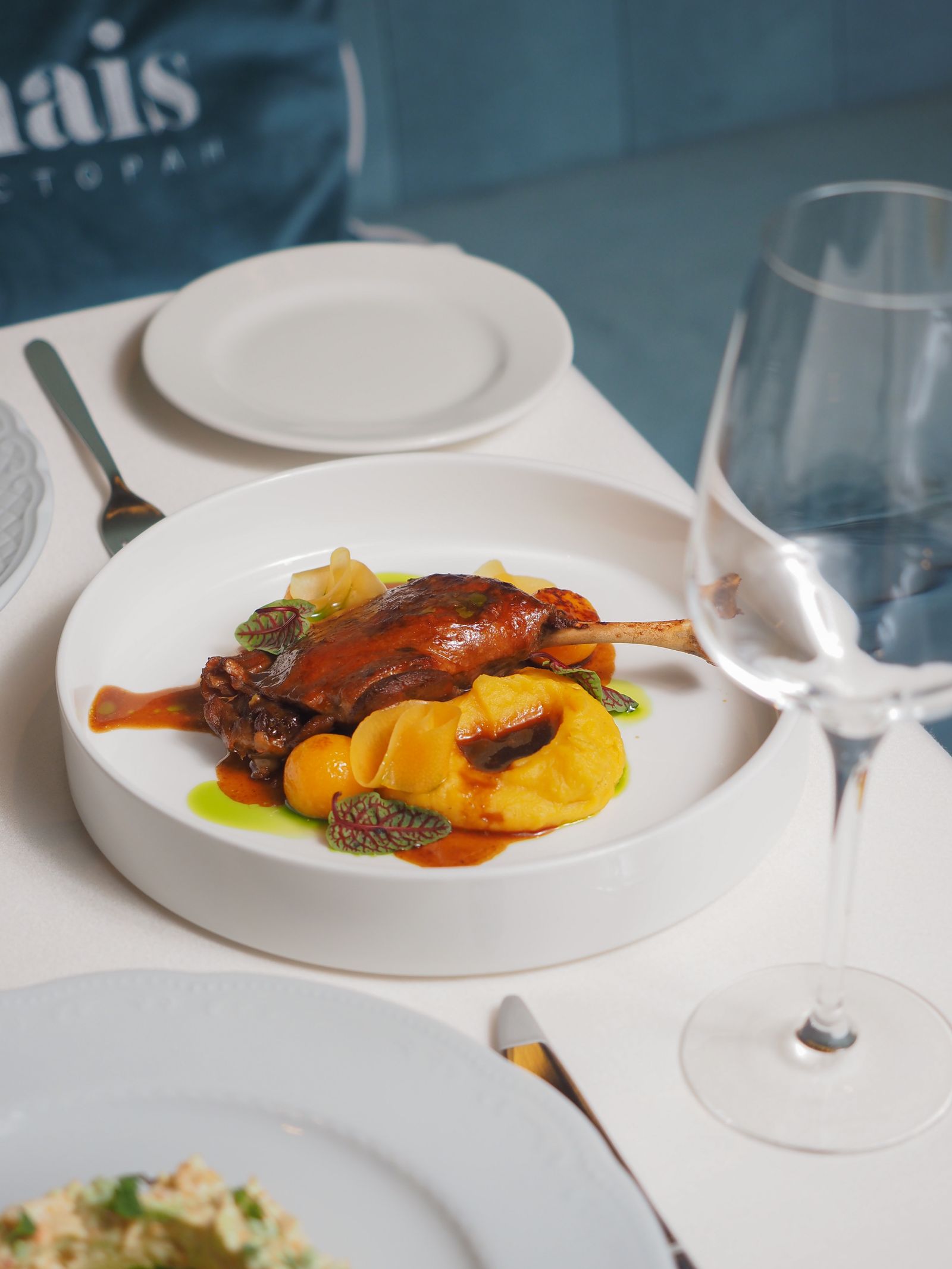
Duck legs slow-cooked submerged in their own fat until impossibly tender, then crisped skin-side down until shatteringly golden.
Duck confit (confit de canard) is one of the oldest preservation techniques in French cuisine, originating in Gascony in southwest France as a method of preserving duck before refrigeration. The duck is salt-cured, then cooked and stored submerged in its own fat — the fat acts as a barrier against bacteria, preserving the meat for months. Gascony's Périgord region, famous for both duck confit and foie gras, is considered the spiritual home of the dish. The Gascon farmers who developed confit were also the first to force-feed ducks and geese for foie gras, creating a food culture of extraordinary richness centred on the duck. The final crisping of the skin — which must be completely dry before it touches the hot pan — is the moment that separates competent from excellent duck confit.
Salt and herb cure the duck for 24 hours before cooking. Cook submerged in duck fat at 80°C for 8 hours minimum. The skin must be completely dry before crisping.


© 2025 What To Eat · hello@whattoeat.world