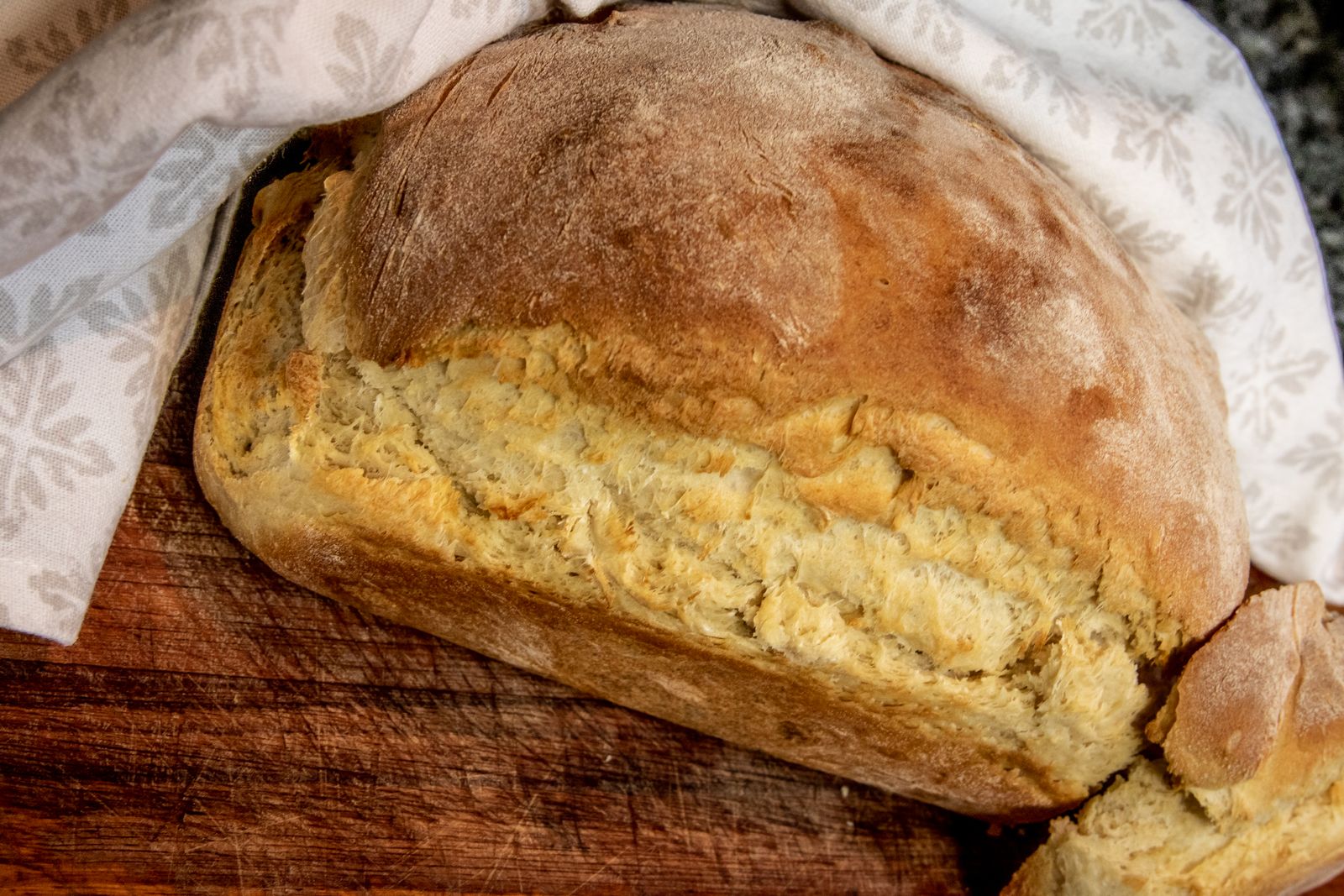
A dense, rustic bread leavened with baking soda and buttermilk instead of yeast, ready in under an hour.
Soda bread became widespread in Ireland after bicarbonate of soda was introduced to the country in the 1830s, offering a fast alternative to yeast-leavened bread at a time when many rural Irish households had simple cooking setups — often just a griddle or pot oven over an open fire — unsuited to slow yeast proving. Soft Irish flour, low in gluten, paired particularly well with the soda-and-buttermilk method, producing a tender crumb. It became especially important during and after the Great Famine as an accessible, low-cost staple, and remains a fixture of Irish baking to this day, usually marked with a cross cut into the top before baking, traditionally said to let the fairies out or to bless the loaf.
Real soda bread uses only flour, baking soda, salt and buttermilk — no yeast, no sugar in the traditional savory version, and minimal kneading, since overworking the dough makes it tough. A deep cross is cut into the top before baking.
© 2025 What To Eat · hello@whattoeat.world