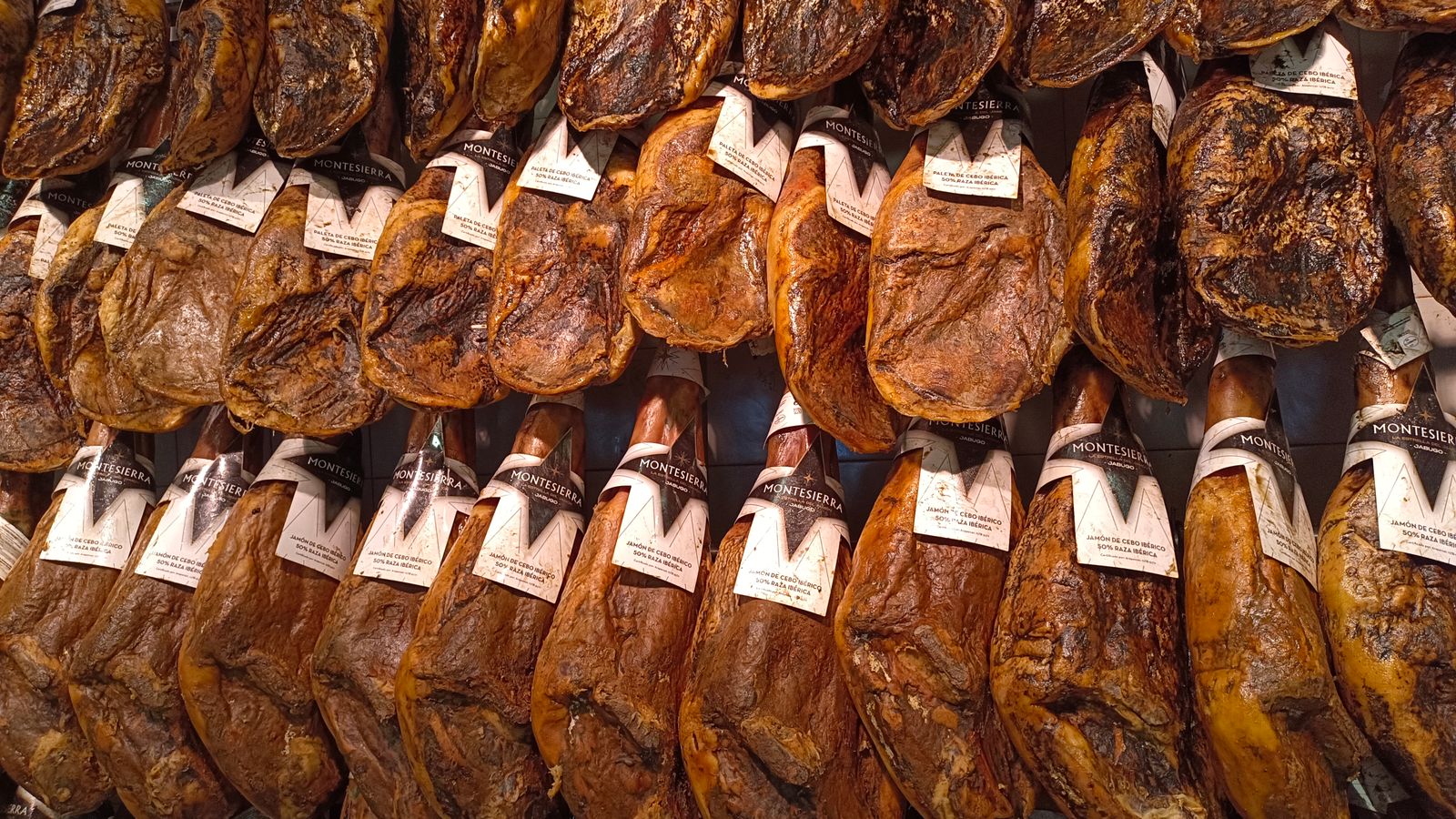
About this Dish
The finest cured ham in the world — from black-footed Iberian pigs raised on acorns in the dehesa woodland of Extremadura and Andalusia. Sliced paper thin and eaten at room temperature, the fat melts on the tongue releasing complex nutty, sweet flavours. Aged up to 48 months.
IngredientsServes 4
🐷Iberian pork hind leg (pata negra), 7-9kg bone-in
🧂Coarse sea salt, 10-12kg (enough to fully bury the leg)
🌿Fresh rosemary, 4 large sprigs
🧄Garlic cloves, 6 whole unpeeled
🌶️Smoked sweet paprika (pimentón de la Vera), 3 tablespoons
🫒Extra virgin olive oil, for rubbing the exposed meat and bone
🌬️Cool, well-ventilated curing space or cellar, ideally 10-15°C and 60-80% humidity
🌡️Lard (manteca de cerdo), 200g for sealing
Method
1
Trim the leg of excess surface fat, leaving a layer about 1-2cm thick to protect the meat during curing. Score the fat lightly in a crosshatch pattern to help the salt penetrate evenly.2
In a large plastic container or wooden curing box, lay a thick bed of coarse sea salt about 5cm deep. Press the pork leg firmly into the salt skin-side down, then completely bury it under the remaining salt, tucking rosemary and garlic around it. Leave in a cold space (4-6°C, like a garage in winter) for roughly one day per kilogram of meat — so about 8-9 days.3
Remove the leg from the salt, brushing off all excess with a clean cloth — do not rinse with water. Rub the exposed meat surfaces and around the bone with olive oil and a dusting of smoked paprika to prevent mould and drying cracks.4
Hang the leg in a cool, ventilated space (around 10-15°C) using butcher's hooks through the trotter for the first 3-6 months, allowing the salt to equalise evenly throughout the meat — this stage is called the 'post-salting' or equalization phase.5
After 6 months, move the ham to a warmer, drier location (18-25°C) to begin the slow sweating stage, where the natural fat begins to migrate through the meat, developing deep flavour. Check monthly for any unwanted mould patches and wipe with a cloth dampened in olive oil.6
After a minimum of 24 months (ideally 36-48 months), test the ham using a thin cala bone needle — insert it near the hip joint and the femur and smell it; it should release a rich, sweet, nutty aroma with no sharp or sour notes. Once ready, use a long, thin jamón knife to carve paper-thin slices starting from the maza (top flat side), cutting with long smooth strokes at a slight angle.7
Serve the sliced jamón at room temperature on a warm plate — never refrigerate cut slices. Eat simply with crusty bread, a drizzle of olive oil, or alongside Manchego cheese and a glass of fino sherry.User Reviews
No reviews yet — be the first!
Sign in to leave a review
Members can create lists, save favourites and get recommendations.
Find the Best Jamon Iberico Near Me
AI-powered — Google, TripAdvisor and food blogs
What To Eat
The World's Food Guide
© 2025 What To Eat · hello@whattoeat.world